- by Williams Omodunefe
Analysis & commentary
The Spreadsheet Delusion: Why Foreign Economists Fail to Understand the Nigerian Market

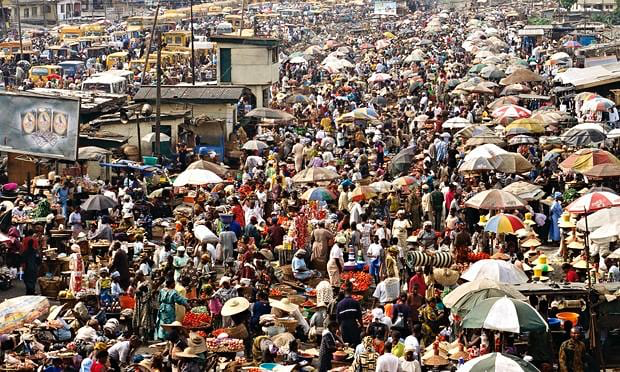
Every year, global consulting firms, Western economic institutes, and development agencies publish beautifully formatted, multi-page dossiers on the future of African commerce. They speak in the clinical, polished vocabulary of Wall Street and Geneva. They plot compound annual growth rates (CAGR), measure formal tax compliance registries, and track macroeconomic indicators from comfortable corporate headquarters in London or luxury hotels in Victoria Island.
If you want to understand how Nigeria actually survives, works, and grows, you have to throw away the Western spreadsheets.
Williams Omodunefe
They build elaborate, expensive predictive models for a system that quite simply does not exist on the ground.
To the institutional analyst, if economic activity is not registered with a corporate affairs commission, processed through a commercial bank, or recorded by a national statistics bureau, it is invisible. It is categorized as a "deficit" or a chaotic margin waiting to be formalized.
This is the spreadsheet delusion. What these institutions miss entirely is that the informal market isn't a chaotic breakdown of structure. It is the structure itself. It is Nigeria’s primary economic engine, unmapped, unrecorded, deeply resilient, and governed by a sophisticated architecture of unwritten laws that you can never quantify from a boardroom.
The Survival Contract: Trust Over Textures
In the West, business moves on the tracks of legal infrastructure. You draft a contract, register a lien, and rely on the state court system to enforce compliance if a partner defaults.
In the real Nigerian economy, particularly within the massive informal supply chains that move goods from international ports to regional open markets, the state is irrelevant. When the legal system is too slow, too corrupt, or completely inaccessible to the average operator, formal contracts are useless.
Instead, the informal sector relies on what I call the Survival Contract, a highly sophisticated network of communal trust, verbal equity, and social collateral.
Take the decentralized logistics networks operating out of markets like Alaba International or Ariaria. Billions of Naira in trade move across state lines every single week on credit lines secured by nothing more than a handshake and a reputation. If a trader defaults, they aren't sued in a magistrate court; they are completely blacklisted from the social fabric of the marketplace. The enforcement mechanism is absolute economic exile.
Western spreadsheet models cannot calculate the value of this social capital. They look at a market woman or an informal distributor and see someone without a bank credit score, completely missing the fact that her communal reputation gives her access to millions in informal liquidity that a commercial bank could never underwrite.
Legal Arbitrage and the Mechanics of the Squeeze
Foreign commentators love to lament the regulatory bottlenecks and shifting policy landscapes in Nigeria. They view regulatory unpredictability as a death sentence for entrepreneurship.
But a struggling Nigerian entrepreneur looking at the market from the ground sees something else entirely: regulatory arbitrage.
When formal governance is inefficient or predatory, characterized by overlapping state levies, erratic regulatory agencies, and informal taxes (agbero tolls), the informal market does not shut down. It mutates. Entrepreneurs look for the blind spots. They find the exact grey zones where state enforcement becomes impossible or too expensive to maintain.
Making money in this terrain requires understanding the exact friction point between written laws and street reality. For example, while a formal logistics company might struggle under the weight of corporate taxes, vehicle registration fees, and municipal permits, a decentralized network of independent dispatch riders operates seamlessly by navigating localized, unwritten agreements with street-level actors.
This isn't lawlessness; it is a hyper-rational response to a predatory environment. The informal economy survives by remaining too fluid for a clumsy state bureaucracy to catch, let alone tax.
Moving Beyond the Surface
If you want to understand how Nigeria actually survives, works, and grows, you have to throw away the Western spreadsheets. You have to stop reading macroeconomic reports written by people who have never had to negotiate a supply chain through a fuel scarcity, or clear goods through a port bottleneck, or protect a retail margin against a violently fluctuating parallel market rate.
We must stop treating our informal economy as a problem to be solved by formalization frameworks designed in Washington. The informal sector is a masterclass in decentralized problem-solving, institutional adaptation, and pure entrepreneurial willpower.
It is time to build an atlas of the market as it actually is, written not by those who observe it from afar, but by those who feel the squeeze and navigate the terrain every single day.


- by Williams Omodunefe
Sign in to comment on this article
Leave your thoughts, reply to other readers, and keep track of conversations from your dashboard.