- by Williams Omodunefe
Analysis & commentary
Hunger Is a Weapon

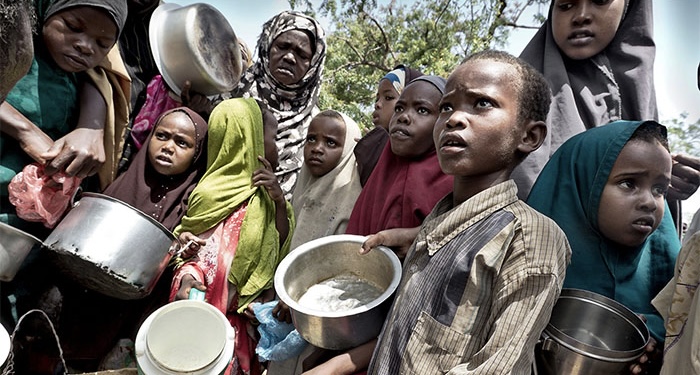
Hunger is not a condition. Hunger is a language.
It speaks in growls, shakes, and desperation. It is older than ideology, older than faith, older than borders. It is not persuaded by reason. It is commanded by survival.
A man who is hungry is predictable only to the provider of food, but a man who is well-fed may defy expectations, resist extremism, and choose caution over destruction.
Williams O. omodunefe
If you want to understand why young men join armed groups in Nigeria, or anywhere else the state has failed, start with hunger. Strip away politics, religion, ideology, what remains is biology. And biology is brutally simple: feed me, or I will die.
The First Lesson: Biology Precedes Belief
A boy in a northern Nigerian village wakes before dawn. His stomach has been empty for twenty-four hours. His family owns nothing beyond the roof over their heads, which is flimsy and unreliable. School is too far. Jobs do not exist. Tomorrow will be the same as today: uncertain, hostile, and hungry.
One morning, a man arrives with rice, oil, and beans. He carries a promise: eat today, and someone will feed you again tomorrow. He also carries a rifle. And the boy, whose brain is running on survival instinct, learns quickly which side keeps the promise.
This is not recruitment by ideology. It is recruitment by consistency.
The boy will follow the man not because of doctrine or doctrine’s God, but because the man controls survival. Hunger rewires morality. It contracts time to the present tense. A future beyond the next meal is a luxury his brain cannot afford.
Hunger as Strategy: Historical and Global Lessons
Hunger has always been weaponized:
In colonial Africa, entire villages were starved into submission. Resistance was not ideological; it was impossible to feed fighters.
During the Siege of Leningrad, survival dictated loyalty, betrayal, and behavior. People followed whoever could feed them, even amid chaos.
Modern terrorist groups exploit the same principle: food, cash, and small resources create bonds far stronger than sermons or propaganda.
In Gaza, in northern Nigeria, in remote Afghan valleys, the pattern repeats: the organization that feeds first recruits first. Hunger is not incidental; it is recruitment infrastructure.
Survival Alignment: The Silent Contract
When food becomes scarce and the state is absent, a silent psychological contract emerges:
I will follow the one who feeds me, because my body cannot betray its needs.
This is what psychologists call “survival alignment.”
It is different from Stockholm syndrome because there is no captivity yet. There is only choice under duress, and the choice is survival.
Even a brief intervention, a single meal, a predictable ration, a promise kept, creates loyalty. It is not ideological; it is biological. And biological loyalty is stronger than ideology in moments of extreme scarcity.
The Role of Predictability
Violent groups understand predictability intuitively. They feed at the same hour, distribute rations in the same location, punish betrayal consistently. The state, by contrast, is erratic: promises are made and broken, subsidies fail, food distributions are politicized or stolen.
Predictability is the edge. It transforms a desperate young man into a dependable recruit.
Consistency outweighs morality.
Reliability outweighs law.
Hunger and Time: The Psychology of the Idle, Hungry Mind
The combination of hunger and idleness is lethal.
Hunger narrows focus to immediate survival.
Idleness extends perception of risk only in the present.
The result? A brain that cannot imagine consequences beyond the next hour.
A society of men like this is ripe for recruitment, not with philosophy, but with logistics.
Even small acts of provision, a meal here, a bag of grain there, create leverage. A group that feeds survives; a group that does not perish or grows weaker.
Hunger and Violence: The Mechanism
The process is terrifyingly simple:
Identification of the desperate - idle, hungry, young men with no assets.
Provision of survival - meals, cash, basic necessities.
Bonding through dependence - predictability of provision builds trust.
Recruitment into action - the man now follows the group because survival depends on it.
Notice what is absent: ideology, coercion, philosophy.
The boy, the man, the recruit acts rationally, by the standards of his biology.
Hunger Beyond Borders
The same mechanics apply globally.
In Yemen, Syria, Somalia, young men enlist, often violently, where starvation is routine.
In urban America, hunger is different but metaphorically similar: alienation, lack of social mobility, absence of hope, all forms of hunger, create susceptibility to gangs, extremist ideologies, or mass violence.
In Gaza, the feeding of children and families by militant groups simultaneously constructs survival and loyalty. Hunger becomes a currency more powerful than fear.
Hunger is universal. And hunger has always been political.
The Bitter Reality
Hunger is not just a humanitarian issue.
It is the primary vector of modern recruitment into violence.
Until societies recognize this, they will continue to fight insurgents with bombs while ignoring the pipelines that produce them. Until they treat survival as a strategic variable, violence will regenerate faster than it can be suppressed.
A man who is hungry is predictable only to the provider of food. A man who is well-fed may defy expectations, resist extremism, and choose caution over destruction. This is the central, uncomfortable truth:
You cannot outgun hunger. You must outfeed it.
Conclusion: Hunger Is Not Just Hunger
It is power.
It is influence.
It is the earliest and most intimate bond a person can feel.
To ignore hunger as a weapon is to ignore the rules of human survival itself. The violence we witness in Nigeria, in Gaza, in global conflict zones, is not just ideology. It is biology, mismanaged and exploited.
And until the world grasps this, millions of young men will continue to act rationally under duress, following whoever can feed them, and societies will continue to wonder why violence keeps regenerating.

- by Williams Omodunefe
Africa’s Youth Advantage Paradox: Why Demographics Have Not Become Power
- by Williams Omodunefe
Demography Without Direction: Why Numbers Alone Don’t Build Nations

- by Williams Omodunefe
Entertainment Is Not Power: Why Visibility Without Ownership Keeps Africa Dependent
- by Williams Omodunefe
Sign in to comment on this article
Leave your thoughts, reply to other readers, and keep track of conversations from your dashboard.