- by Williams Omodunefe
Analysis & commentary
The African Knowledge Gap: Why Access Isn’t Enough, and How Youth Can Leapfrog Development


Africa today sits at a historic crossroads. For the first time, knowledge is freely accessible:
Africa is not poor in potential, it is poor in strategic knowledge application.
Williams O. Omodunefe
Open-source materials online
MOOCs (Massive Open Online Courses)
AI-powered research tools
Global networks of innovation
Yet, Africa remains largely dependent on raw resources and labor, while wealth and innovation are concentrated elsewhere.
The question is simple:
Why hasn’t access to knowledge translated into a knowledge-driven African economy?
Access vs. Application
There is a misconception that having access to information is enough. It is not.
True power lies in application:
Knowing how to solve a problem using knowledge
Building something tangible and scalable
Innovating solutions suited to African realities
African youth may read, watch, or attend courses, yet without purposeful application, the knowledge remains inert.
The Role of Foresight
Innovation requires foresight:
Seeing beyond immediate gains
Anticipating societal and market needs
Designing solutions for the long term
Many African youth focus on short-term survival:
Quick gigs
Entertainment fame
Immediate money-making
While these are valid ambitions, they often crowd out visionary thinking, leaving the continent trailing in industrial, technological, and scientific advancements.
Cultural Barriers to Knowledge Application
Several societal habits slow the translation of knowledge into innovation:
Risk aversion - Fear of failure is normalized
Copy-paste mentality - Success is measured by replication, not creation
External validation obsession - Achievements are defined by Western recognition
Short-termism - Immediate profit prioritized over sustainable growth
Breaking these patterns is essential for African youth-led innovation.
Leapfrogging Development
Africa can skip traditional development stages if youth leverage technology and global knowledge:
Mobile banking innovations (e.g., M-Pesa in Kenya)
Renewable energy solutions for off-grid communities
AI-powered agriculture and healthcare systems
EdTech platforms tailored for African curricula
These examples show that strategic use of knowledge can bypass decades of conventional industrialization.
Youth as Knowledge Catalysts
To truly shift Africa’s trajectory, youth must:
Move from passive consumption to active creation
Build ecosystems for collaboration and mentorship
Transform knowledge into products, services, and scalable solutions
Think globally, act locally
Knowledge without action is just potential. African youth must convert potential into impact.
Bridging the Gap: Practical Steps
Intentional Learning: Focus on problem-solving, not just content consumption
Skill Deep-Dives: Master specific areas where Africa faces challenges
Prototype and Test: Apply skills to real-world problems immediately
Document and Share: Create knowledge networks within African communities
Mentorship & Collaboration: Learn from both local and global innovators
When systematically applied, these steps allow youth to outpace traditional development models.
Conclusion: Knowledge as the New Power
Africa is not poor in potential, it is poor in strategic knowledge application.
The youth of Africa hold the key to transformation:
They are connected
They are informed
They are numerous
If African youth combine discipline with knowledge-driven innovation, the continent can shift from a resource-dependent economy to a self-sustaining, innovation-led powerhouse.

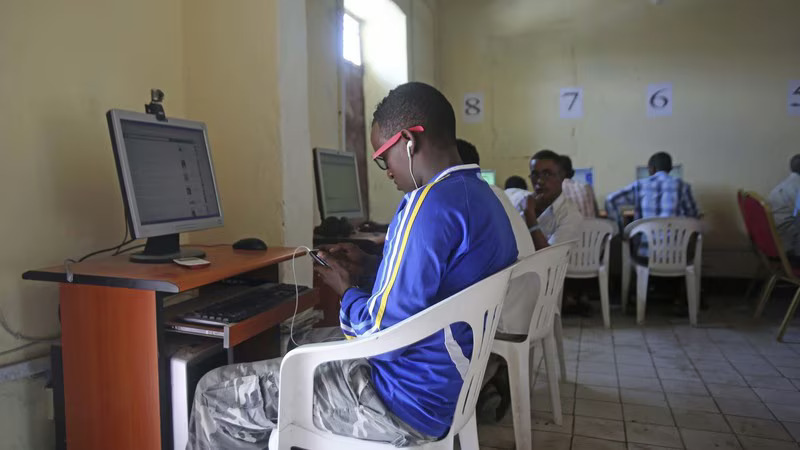
- by Williams Omodunefe
Why Africa Struggles to Build Serious Innovation Economies

- by Williams Omodunefe
Knowledge Is Everywhere, Progress Is Not

- by Williams Omodunefe

Sign in to comment on this article
Leave your thoughts, reply to other readers, and keep track of conversations from your dashboard.