- by Williams Omodunefe
Analysis & commentary
A World With Nothing to Lose

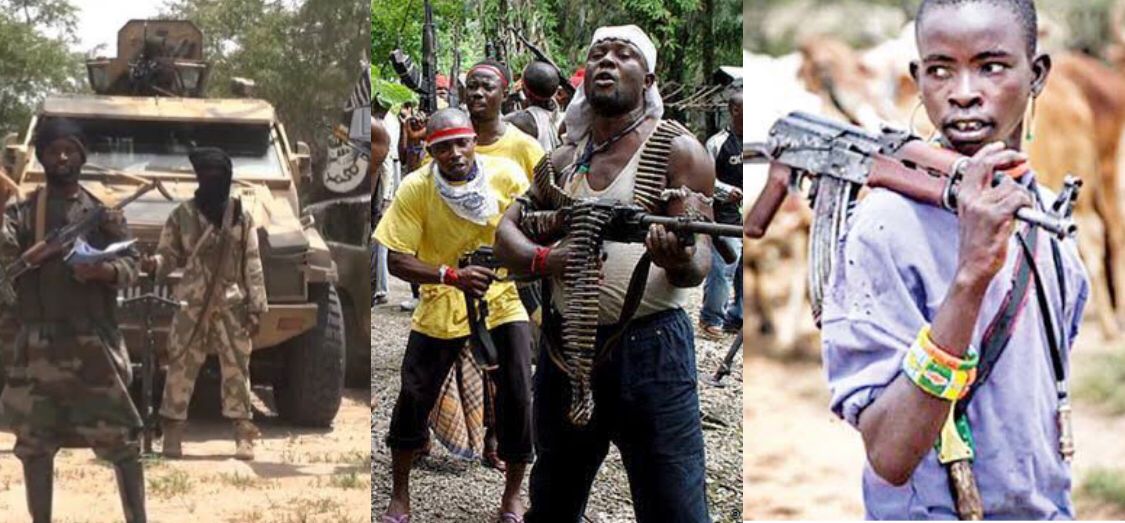
Imagine waking up every morning knowing three things with certainty.
First: you will not eat unless something unexpected happens.
Second: nothing you do today changes tomorrow.
Third: no one is coming.
A world that produces millions of people with nothing to lose should not be surprised when they act like it.
Williams O. omodunefe
Not a government.
Not a charity.
Not the future.
This is not a metaphor. This is the daily reality of millions of young men in Nigeria.
They wake before sunrise, not because they are industrious, but because sleep is thin when hunger is constant. They sit outside homes that do not belong to them, in villages that feel temporary, in towns that offer no work and no direction. The day stretches endlessly ahead, empty and hostile. Time becomes an enemy.
When outsiders speak of insecurity, terrorism, or banditry, they imagine ideology, men radicalized by sermons, driven by hatred, intoxicated by belief. This is comforting. It allows distance. It suggests that violence is a defect of culture or religion, something foreign, something other.
But that story collapses the moment you sit inside a hungry body.
Hunger Changes the Brain Before It Changes Behavior
Chronic hunger does not just weaken the body. It rewires the mind.
Neuroscience tells us that sustained hunger reduces impulse control, shortens time horizons, and narrows decision‑making to the immediate moment. The future becomes abstract. Morality becomes negotiable. Risk feels distant.
This is why starvation has always been used as a weapon. Empires understood this long before modern psychology gave it names. You do not conquer people by persuading them. You conquer them by controlling survival.
In Nigeria’s conflict zones, hunger does the recruiting long before ideology ever arrives.
A young man does not wake up wanting to be a bandit or a terrorist. He wakes up wanting to eat. When an armed group appears, not with philosophy, but with food, the decision is no longer moral. It is biological.
The gun is secondary.
The meal is primary.
The State as an Abstraction
To understand why violent groups thrive, one must understand how the state appears to those at the margins.
To many Nigerian youths, the state is not a protector. It is a rumor. A distant voice on the radio. A convoy that passes once in a while. A uniform that arrives only after damage is done.
Laws exist on paper. Rights exist in speeches. Elections exist on television. None of these stop hunger. None of these fill time. None of these offer predictability.
Predictability is power.
Armed groups understand this deeply. They are brutal, but they are consistent. They punish betrayal. They reward loyalty. They show up when they say they will. In places where life is chaos, consistency feels like order.
People do not align with who is good.
They align with who is present.
Idle Time Is Not Neutral
After hunger, idleness finishes the job.
Idle time is not rest. It is erosion. It eats dignity, discipline, and patience. Long days without structure stretch into weeks, then years. The mind searches for stimulation, meaning, recognition, anything to break the monotony.
Violent groups recruit in the quiet hours. In the long afternoons. In the evenings when the day has produced nothing but fatigue and frustration.
This is why counter‑terrorism strategies that focus only on force fail. You can kill fighters, but you cannot kill idle time. And idle time produces replacements faster than bullets can stop them.
Routine, not ideology, is the enemy of recruitment.
A man who must wake early for work, who expects to be paid on Friday, who knows his absence will be noticed, begins to think in units of days and weeks. He starts planning. Planning creates attachment. Attachment creates caution.
Violence hates caution.
The Lie of “Moral Failure”
There is a cruel dishonesty in how societies judge those who fall into violence.
We call them immoral, criminal, radicalized. We pretend their choices were made in conditions similar to our own. This absolves systems and condemns individuals.
But morality is a luxury of stability.
A man with food, shelter, and time can afford principles. A man stripped of all three is operating under a different logic entirely. This does not make him good. But it makes him predictable.
And predictability is the foundation of any serious solution.
This Is Not Just Nigeria
It would be easy, and comfortable, to dismiss this as a Nigerian failure. It is not.
In the United States, many young men are not starving, but they are economically and socially unanchored. They delay families, own nothing, feel invisible, and experience the future as closed. Their violence is sporadic, individual, and shocking, but it comes from the same root: nothing to lose.
In Israel and Palestine, entire populations have grown up with futures defined by siege and retaliation. When life is framed as perpetual survival, violence stops being exceptional. It becomes inherited.
Different contexts.
Same psychology.
When the future is closed, the present becomes volatile.
Stakes Are What Civilize Human Beings
Every stable society, stripped of romance, rests on a simple equation:
People behave when disorder costs them more than order.
This is not virtue. It is incentive.
Assets create caution.
Family creates calculation.
Routine creates restraint.
A man who owns something fears chaos.
A man who expects something hesitates before destroying it.
But a man with nothing is already living in collapse.
This is why appeals to patriotism fail where stakes do not exist. You cannot ask someone to defend a society that has given them no reason to preserve it.
The Bitter Conclusion
We are not living through an age of extremism.
We are living through an age of mass dispossession, economic, social, and psychological. Terrorism, banditry, and random violence are symptoms, not causes.
Bombs can destroy bodies.
They cannot manufacture futures.
Until societies learn to reopen horizons, with food, routine, assets, and real stakes, violence will continue to regenerate, no matter how sophisticated the weapons used against it.
The truth is bitter because it is simple:
A world that produces millions of people with nothing to lose should not be surprised when they act like it.

- by Williams Omodunefe
Africa’s Youth Advantage Paradox: Why Demographics Have Not Become Power
- by Williams Omodunefe
Demography Without Direction: Why Numbers Alone Don’t Build Nations

- by Williams Omodunefe
Entertainment Is Not Power: Why Visibility Without Ownership Keeps Africa Dependent
- by Williams Omodunefe
Sign in to comment on this article
Leave your thoughts, reply to other readers, and keep track of conversations from your dashboard.