- by Williams Omodunefe
Analysis & commentary
Demography Without Direction: Why Numbers Alone Don’t Build Nations

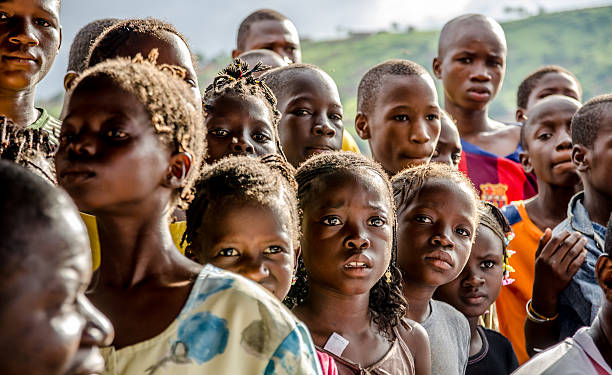
A Policy Examination of Africa’s Most Misunderstood Asset
Across policy forums, international reports, and development conferences, Africa’s population is often described using one word: potential.
By 2050, one in every four people on earth will be African. This statistic is frequently presented as inevitable leverage, economic power waiting to happen.
The question is no longer whether Africa has the numbers, the question is whether Africa has the will to give those numbers direction.
Williams O. Omodunefe
But history, economics, and governance tell a harsher truth:
Demography without direction does not produce development.
It produces pressure.
Population Is a Multiplier. Not a Solution
Population does not automatically create wealth.
It multiplies whatever system exists.
In strong systems, population multiplies productivity
In weak systems, population multiplies poverty
In corrupt systems, population multiplies exploitation
Africa’s problem is not its population size.
It is the quality and intention of the systems governing that population.
Many African states expanded rapidly in population without building:
Industrial capacity
Technological ecosystems
Administrative competence
Scalable education-to-employment pipelines
The result is a youth population growing faster than opportunity.
The Asian Contrast: Why Demography Worked Elsewhere
Asian countries, particularly China, South Korea, Vietnam, and Singapore, are often cited as proof that large populations can drive growth. This comparison is frequently misunderstood.
Their success was not accidental.
They deliberately:
Identified strategic industries
Directed education toward national goals
Protected local manufacturing
Absorbed youth into productive labor
Delayed consumption in favor of production
Population growth was managed, not celebrated.
Africa, by contrast, largely expanded without industrial planning. The youth grew, but the economy did not grow with them.
Education Without Economic Absorption
One of Africa’s greatest contradictions is education without employment.
Every year:
Universities produce graduates
Skills are acquired
Certificates are earned
Yet industries capable of absorbing these graduates barely exist.
From a policy standpoint, this is catastrophic. Education that does not feed into production becomes:
Social frustration
Political anger
Migration pressure
This explains why African youth are simultaneously:
Educated
Unemployed
Politically aware
Economically excluded
It is not a moral failure.
It is a structural one.
The Informal Economy Trap
Because formal systems are weak, African youth are pushed into the informal economy, trading, hustling, freelancing, survival entrepreneurship.
While often praised as “resilience,” informality has limits:
No scalability
No protection
No long-term wealth creation
No policy influence
Informal economies keep people alive, but they do not build nations.
A population trapped in informality cannot generate the tax base, innovation, or institutional stability required for global relevance.
Political Exclusion of the Majority
Another critical issue is political design.
African politics is often structured to:
Reward age and loyalty over competence
Exclude youth from decision-making
Treat young people as foot soldiers, not stakeholders
This creates a dangerous contradiction:
The majority of the population has the least influence over policy direction.
When youth are excluded from governance, policy becomes detached from demographic reality, and national planning becomes outdated the moment it is written.
Dependency as a Structural Outcome
Without strong internal systems, population growth increases dependency:
On foreign aid
On imports
On remittances
On external technology and platforms
This dependency reinforces the global perception of Africa as:
A market, not a maker
A consumer, not a creator
A recipient, not a contributor
And perception matters in global power dynamics.
The Cost of No National Vision
Perhaps the most damaging issue is the absence of clear national visions.
Many African countries do not have:
20–30 year industrial roadmaps
Youth-centered development strategies
Clear answers to “what do we produce?”
Without vision, population growth becomes unmanaged expansion, growth without purpose.
Youth are left to self-direct in a system that provides no direction.
Reframing the Population Debate
Africa does not need fewer young people.
It needs intentional population governance.
This means:
Aligning education with production
Building industries before celebrating demographics
Including youth in real governance
Planning beyond election cycles
Population is power only when it is organized.
Conclusion: A Demographic Reckoning
Africa’s youth population is not a guarantee of future greatness.
It is a test.
A test of leadership, planning, and courage.
If African states fail to direct this demographic reality, the consequences will not be theoretical, they will be economic, social, and political.
The question is no longer whether Africa has the numbers.
The question is whether Africa has the will to give those numbers direction.

- by Williams Omodunefe
Africa’s Youth Advantage Paradox: Why Demographics Have Not Become Power

- by Williams Omodunefe
Entertainment Is Not Power: Why Visibility Without Ownership Keeps Africa Dependent
- by Williams Omodunefe
The State Failed First: Why African Youth Inherited Weak Systems, Not Weak Minds

- by Williams Omodunefe
Sign in to comment on this article
Leave your thoughts, reply to other readers, and keep track of conversations from your dashboard.