- by Williams Omodunefe
Analysis & commentary
Africa’s Youth Advantage Paradox: Why Demographics Have Not Become Power


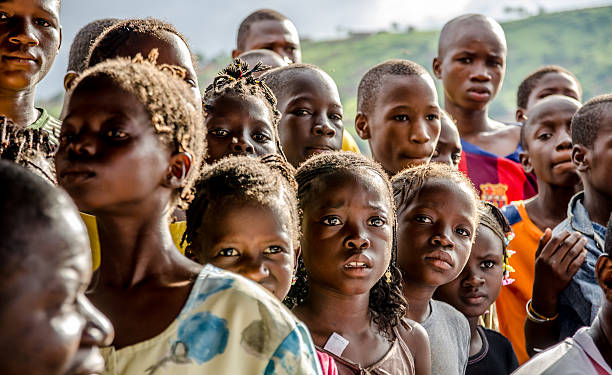
Africa is often described as the continent of the future. The reason given is simple and repeated endlessly: Africa is young.
With over 60% of its population under the age of 25, Africa is projected to have the largest workforce in the world within a few decades. This statistic is frequently presented as destiny, as if power, prosperity, and relevance are guaranteed by demographics alone.
The real issue facing Africa is not whether it has enough young people. It is whether it has systems capable of converting youth into power.
Williams O. Omodunefe
Yet reality tells a different story.
Despite this “youth advantage,” Africa remains economically weak, politically marginal, and technologically dependent. Its young people are energetic, vocal, and visible, especially online, but largely absent from real power, ownership, and decision-making. This raises a difficult but necessary policy question:
Why has Africa’s youth population not translated into power?
Youth Is Potential, Not Power
From a policy perspective, population size is not power.
It is potential.
Power only emerges when population is:
Educated with purpose
Integrated into productive systems
Given clear economic and political roles
Supported by long-term institutional planning
Without these, a large youth population becomes a burden, not an advantage.
History supports this. Countries that became global powers did not do so simply because they were young. They became powerful because their youth were absorbed into systems of production, innovation, and governance.
Africa has largely failed at this absorption.
The Absence of Directional Policy
One of the most critical failures across African states is the absence of youth-directional policy.
Most governments can tell you:
How many young people they have
How fast the population is growing
But very few can clearly answer:
What exactly these young people are being prepared to do
Which sectors they are meant to dominate
How their skills align with national development goals
As a result, Africa has millions of educated but underutilized young people, graduates without industries, creatives without ownership, and entrepreneurs without infrastructure.
This is not accidental. It is the outcome of policy negligence, not youth failure.
Consumption Over Production
Another reason Africa’s youth has not become power is the structure of African economies themselves.
Most African economies are:
Import-dependent
Consumption-driven
Weak in manufacturing and technology
Oriented toward raw exports
In such systems, young people are positioned primarily as:
Consumers of foreign products
Informal traders
Political mobilizers during elections
Entertainers and athletes
These roles generate visibility, but not power.
True power comes from production, owning factories, platforms, technologies, supply chains, and institutions. Africa’s youth is largely locked out of these spaces, not because of laziness, but because the systems that enable production are weak or deliberately exclusionary.
The Myth of “Time Will Fix It”
A dangerous assumption often repeated is that Africa’s youth advantage will “eventually” pay off.
Policy history suggests otherwise.
Youth without:
Jobs
Skills aligned to industry
Political inclusion
Economic ownership
do not automatically become productive adults. Instead, societies experience:
Chronic unemployment
Brain drain
Social unrest
Expanded informal economies
Dependency on foreign aid and remittances
In this sense, time does not fix structural problems.
Policy does.
Who Benefits From a Directionless Youth?
It is important to ask an uncomfortable question:
Who benefits from a large but powerless youth population?
In many African countries:
Youth are useful for votes, not governance
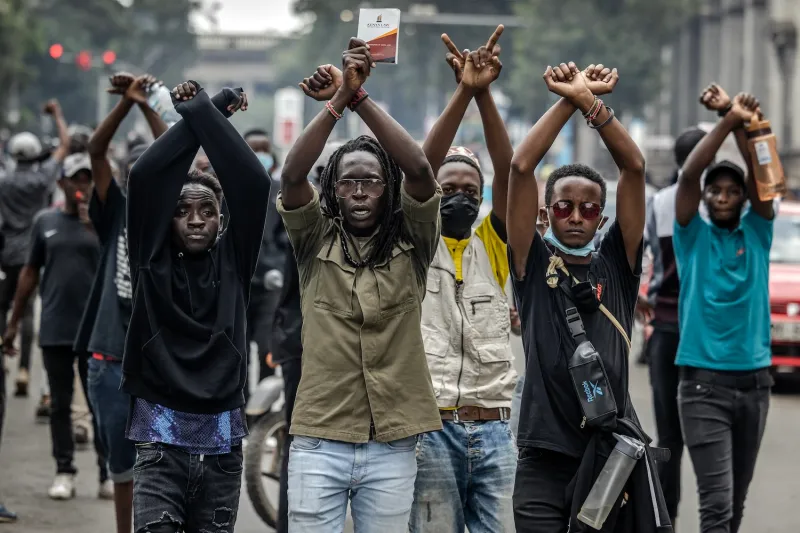
For protests, not policymaking
For cultural relevance, not economic control
This creates a cycle where young people are constantly active but rarely influential. Energy is expended, but systems remain unchanged.
From a policy standpoint, this is a failure of inclusion, not ambition.
Reframing the Youth Question
The real issue facing Africa is not whether it has enough young people.
It is whether it has systems capable of converting youth into power.
This requires:
Education tied to real economic needs
Industrial and technological planning
Youth inclusion beyond symbolism
Long-term national development vision
Until these exist, Africa’s youth advantage will remain a statistic admired by analysts but feared by policymakers.
Conclusion: A Warning, Not a Celebration
Africa’s youth population should not be celebrated blindly.
It should be taken seriously.
Without deliberate policy choices, today’s advantage can become tomorrow’s crisis.
But with clarity, inclusion, and structural reform, Africa’s youth can become its greatest force.
This series begins from that premise, not optimism, but responsibility.

- by Williams Omodunefe
Demography Without Direction: Why Numbers Alone Don’t Build Nations

- by Williams Omodunefe
Entertainment Is Not Power: Why Visibility Without Ownership Keeps Africa Dependent
- by Williams Omodunefe
The State Failed First: Why African Youth Inherited Weak Systems, Not Weak Minds

- by Williams Omodunefe
Sign in to comment on this article
Leave your thoughts, reply to other readers, and keep track of conversations from your dashboard.