- by Williams Omodunefe
Analysis & commentary
Africa’s Youth Advantage: Why a Young Population Has Not Translated Into Power


Introduction
Africa is the youngest continent on earth.
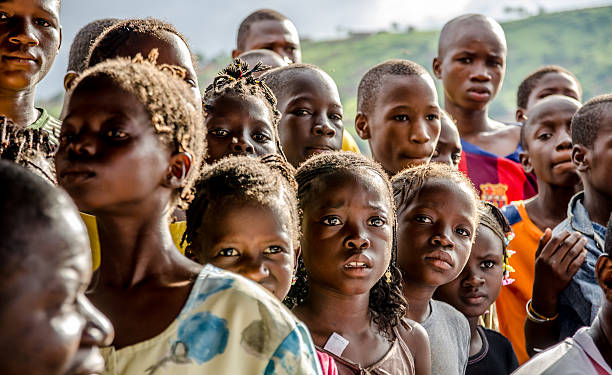
More than 60% of Africans are under the age of 25, a statistic that is often repeated with optimism by policymakers, international organizations, and African leaders themselves. We are told this “youth bulge” is Africa’s greatest asset, a demographic advantage that will one day translate into innovation, productivity, and global relevance.
Societies that dominate globally do not see themselves as recipients of help; they see themselves as producers of value.
Williams O. Omodunefe
Yet, decades later, this promise remains largely unfulfilled.
Despite having the largest concentration of young people in the world, Africa continues to lag behind in industrial innovation, technological leadership, and global economic influence. Youth unemployment remains alarmingly high, political power is still dominated by aging elites, and Africa’s contribution to global knowledge production remains marginal.
This raises a difficult but necessary question:
Why has Africa’s youth advantage not translated into real power?
1. Demography Without Direction Is Not an Advantage
A large youth population, on its own, means nothing.
History shows that demographic advantages only become meaningful when they are intentionally guided. Europe’s post-war boom, China’s manufacturing rise, and even India’s technology sector were not accidental outcomes of population size. They were the result of deliberate state planning, education reform, and industrial policy.
In Africa, youthfulness has been treated as a statistic to celebrate, not a resource to organize.
Governments routinely highlight population numbers at international forums, but fail to answer basic questions:
What skills are these young people being prepared for?
What industries are they being trained to serve?
What long-term economic roles do they occupy?
Without a clear national vision, a youth population becomes a burden rather than an asset.
2. Education Systems Designed for Obedience, Not Production
One of the most critical failures lies in Africa’s education systems.
Across many African countries, education remains:
Theoretical rather than practical
Certificate-driven rather than skill-driven
Focused on memorization instead of problem-solving
Students graduate knowing how to pass exams but not how to build systems, design products, or solve real economic problems.
More troubling is the colonial structure of education that still persists. Curricula often prioritize foreign histories, foreign case studies, and foreign validation, while local problems remain understudied and unsolved.
A youth population trained primarily to seek jobs, rather than create industries, cannot generate power.
3. Political Exclusion of the Youth Majority
Africa’s politics is one of the few spaces in the world where the majority has almost no power.
Despite young people forming the bulk of the population:
Political leadership remains dominated by individuals in their 60s, 70s, and even 80s
Youth participation is often limited to campaign mobilization and street protests
Decision-making power remains tightly controlled by entrenched elites
This disconnect creates a system where policies are made by people who neither understand youth realities nor share their future consequences.
When young people are excluded from power, innovation is stifled, urgency disappears, and national planning becomes outdated.
4. The Culture of Survival Over Innovation
Many African youths are not lazy, they are overburdened.
In economies with weak safety nets, young people are forced into survival mode early in life:
Hustling for daily income
Supporting extended families
Navigating unstable systems
Survival thinking prioritizes immediate returns, not long-term experimentation.
Innovation, however, requires:
Time to fail
Capital patience
Institutional support
Without these conditions, risk-taking becomes a luxury few can afford.
As a result, many talented young Africans channel their intelligence into short-term trading, entertainment, or migration rather than building scalable systems.
5. Talent Drain as a Rational Choice
Africa’s youth are often blamed for migrating abroad, but this framing is dishonest.
Migration is not a moral failure, it is a rational response to structural neglect.
When:
Innovation is unsupported
Merit is unrewarded
Institutions are hostile to excellence
Talented individuals will seek environments where their effort yields returns.
The tragedy is not that Africa’s youth leave, it is that African systems push them out.
6. Dependency Thinking and the Loss of Agency
Perhaps the most damaging factor is psychological.
Many young Africans grow up internalizing the idea that:
Progress must come from outside
Solutions must be imported
Validation must be foreign
This mindset weakens agency.
Societies that dominate globally do not see themselves as recipients of help; they see themselves as producers of value. Until Africa’s youth collectively adopt this mindset, not as motivational rhetoric but as practical orientation, demographic strength will remain symbolic.
Conclusion: Youth Is Potential, Not Power
Africa’s youth population is not yet an advantage, it is unfinished potential.
Potential becomes power only when:
Education produces competence
Politics includes the young
Economies reward innovation
Culture celebrates creation over survival
Until then, the narrative of a “youth advantage” will remain aspirational, repeated at conferences but absent in reality.
The challenge before African youth is not merely to demand inclusion, but to redefine value, build parallel systems, and insist on relevance through competence.
Demography offers opportunity, but direction determines destiny.

- by Williams Omodunefe
Demography Without Direction: Why Numbers Alone Don’t Build Nations

- by Williams Omodunefe
Entertainment Is Not Power: Why Visibility Without Ownership Keeps Africa Dependent

- by Williams Omodunefe
The State Failed First: Why African Youth Inherited Weak Systems, Not Weak Minds

- by Williams Omodunefe
Sign in to comment on this article
Leave your thoughts, reply to other readers, and keep track of conversations from your dashboard.